Organ
One of the finest examples of the English Romantic organ to be found anywhere in the world
Music is integral to life and worship at the Cathedral. At the very heart of this is our organ.
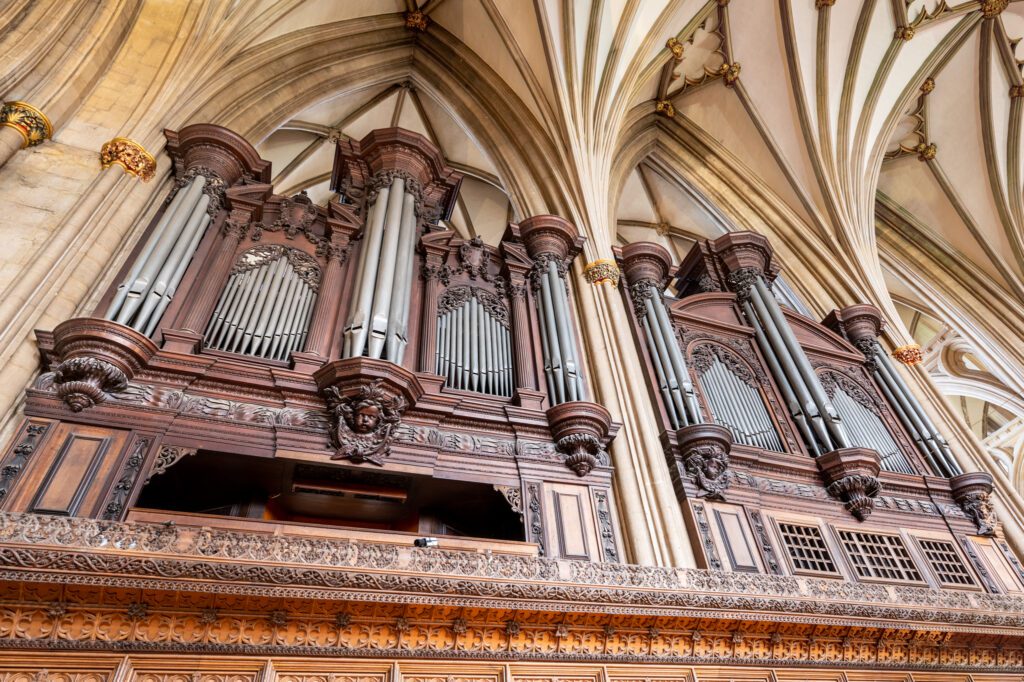
Dating from 1685, the year of both Bach and Handel’s birth…
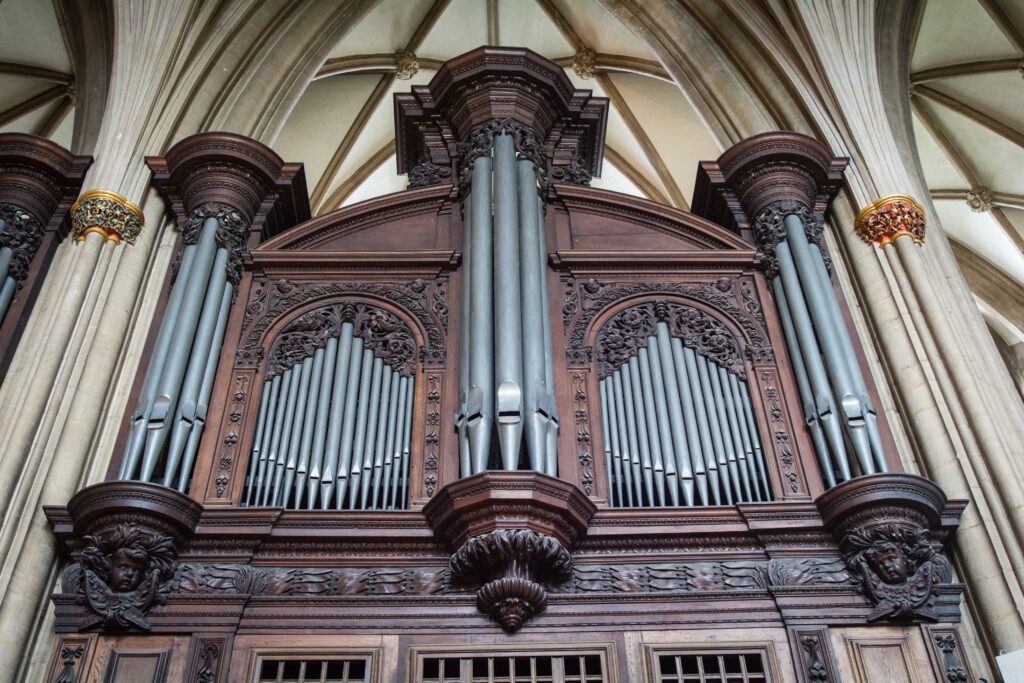
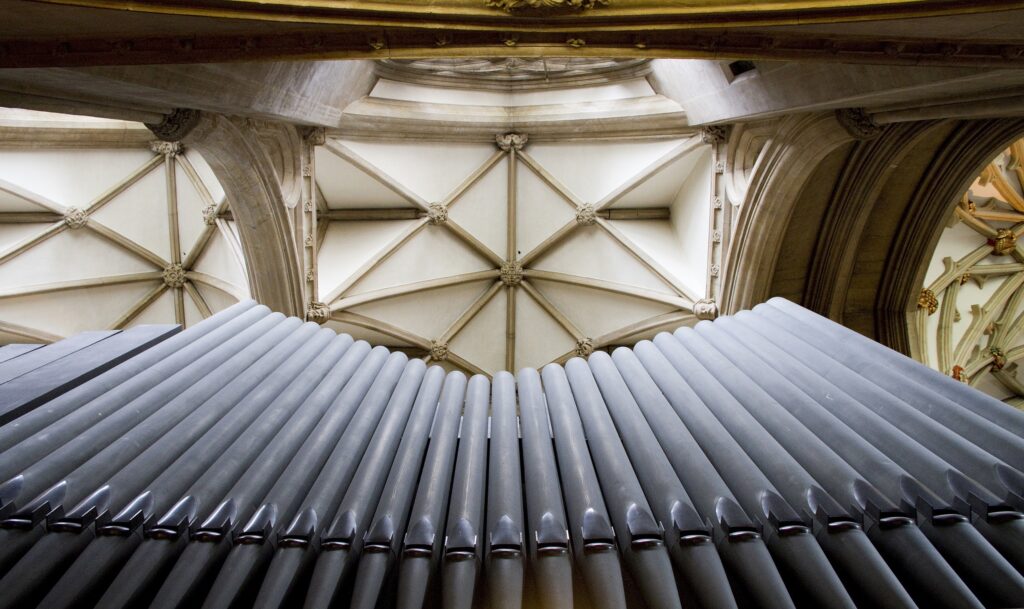
Music is integral to life and worship at Bristol Cathedral, and at its heart is our magnificent organ. Originally built by Renatus Harris in 1685—the same year that both Bach and Handel were born—its casing and some pipes survive from this Stuart-era instrument. When the new Nave was completed in the late 19th century, the Cathedral commissioned J. W. Walker & Sons, the leading organ builders of the time, to create an instrument suited to the space. This Walker organ survives today, standing as one of the last examples of its kind and period in the country, and as one of the finest examples of the English Romantic organ in the world.
After two years of meticulous work, the organ has now been fully restored. The restoration, carried out by the renowned specialists Harrison & Harrison, involved a comprehensive overhaul of all 3,855 pipes to clean, repair, and rebuild the instrument, ensuring it continues to play a central role in our worship and musical life. Completed in September 2025, the project has preserved the organ’s historic character while enhancing its tonal richness, allowing its magnificent voice to inspire generations to come.
Bristol Cathedral Organ Specification 2025
“…The organ’s technology dates from 1907 – the best analogy is that of a car.”
This is 1907 vintage piece which, rather than being driven on occasional Sunday afternoons in the countryside, is driven every single day, usually for over 20 hours each week and considerably more during Lent and Advent. There are some pipes and sounds which, in my 20 year tenure as Master of the Choristers and Organist, I have never heard. A sensitive and proper renovation would be hugely exciting for current organ builders, would help to preserve and clean the already exceptional sound quality and would mean that pipes and sounds were made fully available for the first time in decades”.
– Mark Lee, Director of Music
Thank you
We extend our heartfelt thanks to the Harry Crook Foundation and all the supporters who have made the Organ restoration possible.
If you would like to help support Bristol Cathedral’s vibrant music programme, your generosity would be deeply appreciated.
Thank you for your support.
Why was this restoration needed?
The organ was last restored in 1989 and had played in over 13,000 services since. Over time, parts wore out, pipes gathered dust, and moving parts became clogged, making some notes unplayable and the instrument increasingly unreliable. The restoration was essential to preserve the organ for future generations.
When did the work take place?
The restoration took place between January 2024 – September 2025. During this time, the organ was carefully taken apart, cleaned, repaired, and rebuilt by expert organ builders Harrison & Harrison. Many of the smaller pipes were transported to their workshop in Durham, while the larger pipes were restored here at the Cathedral.
Funders
Our grateful thanks to the Harry Crook Foundation and the many other generous supporters who have made this once in a generation project possible.
What happens now?
Looking ahead, we are planning an exciting programme of concerts and events throughout 2026 to celebrate the restored organ and showcase its magnificent sound. Details will be announced soon.
Sign up to our newsletterWhy do Cathedrals have organs?
Organ music has traditionally accompanied Cathedral choirs during services. Many of the cathedral’s services, such as Evensong and the Cathedral Eucharist, feature music sung by the Cathedral choir.
How does an organ work?
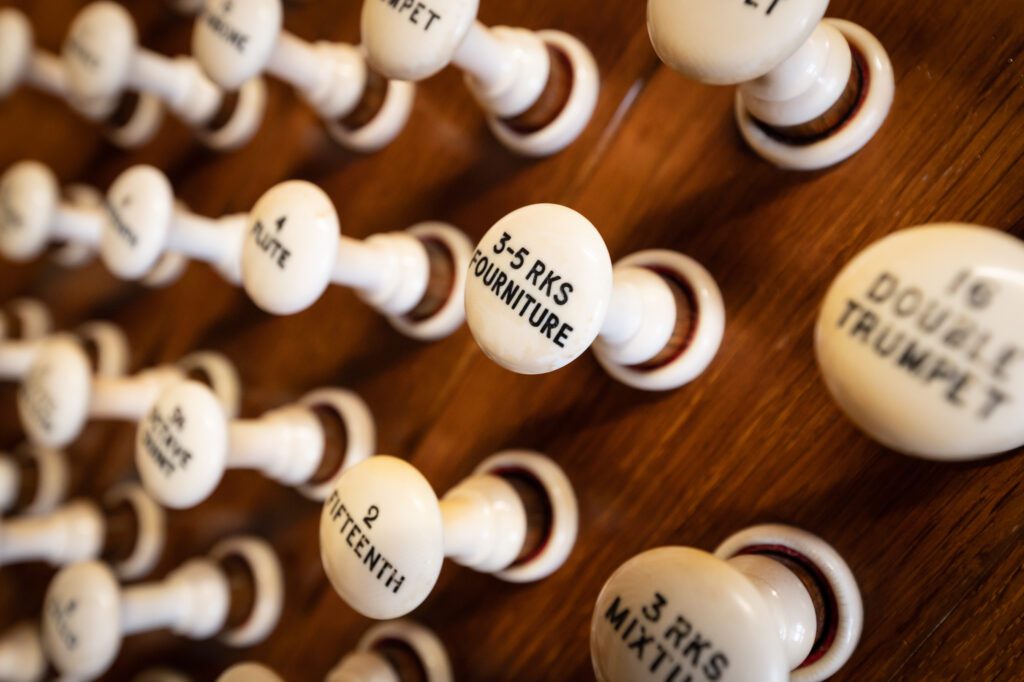
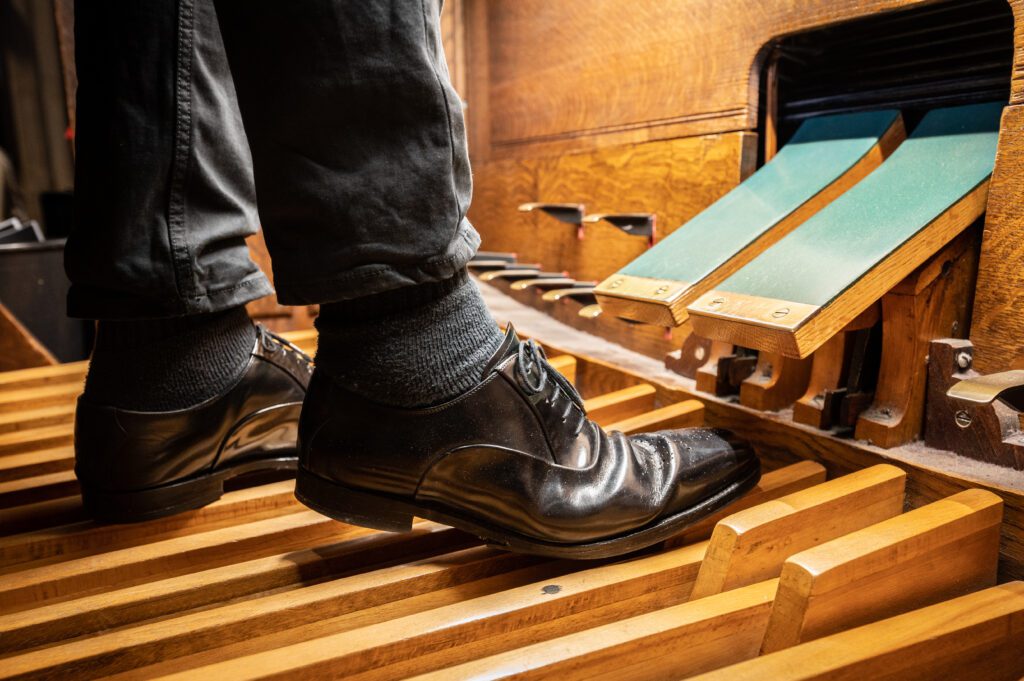
An organ is a mechanical wind instrument. This means that the pressing down keys or pedals and pulling a stop makes a physical change to the instrument. Air goes into the organ and out through pipes. The pipes the air goes into depends on which keys are pressed on the keyboard and which stop(s) are pulled.